English| EUR
Suggested for you
More currencies
Choose a language
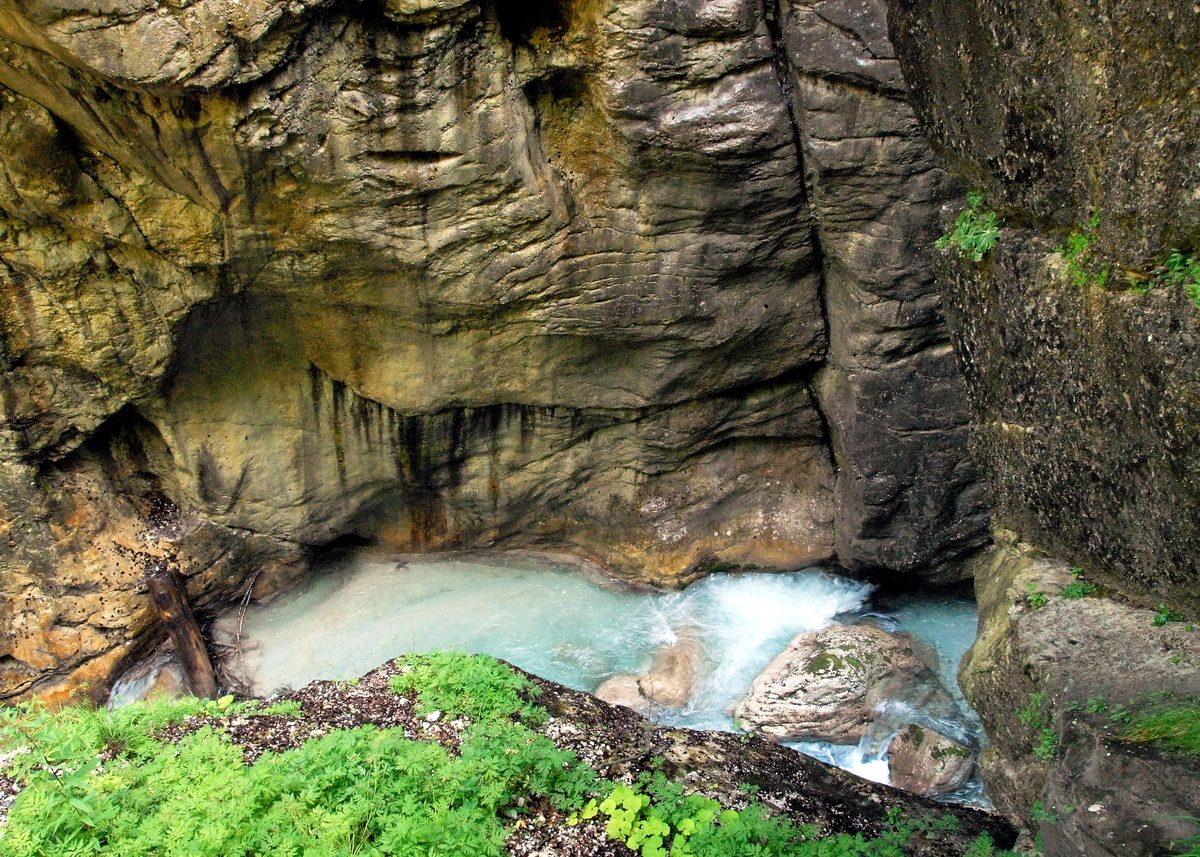
Tscheppaschlucht is a walk-through gorge in Carinthia with fixed walkways, handrails, and bridges built into the rock. The trail follows the Vellach River through narrow passages and waterfalls without requiring climbing, swimming, or technical canyoning skills. This page explains what the experience feels like and who manages it comfortably.
Quick answer
Tscheppaschlucht is not technical canyoning and does not require rappelling or swimming. The trail uses secured metal walkways, bridges, and stairs with continuous handrails. Most visitors with moderate fitness complete the route without difficulty. The narrowest sections and spray zones near waterfalls can feel intense if you have claustrophobia or dislike getting wet, but the path remains stable and guarded throughout. Visitors with severe vertigo may find the suspension bridges and elevated sections challenging.
The Tscheppaschlucht gorge was carved by glacial meltwater over thousands of years, creating passages that narrow to less than two meters at several points. The modern trail system installed in the 1920s transforms what would be an extreme environment into a controlled walk, but the gorge retains its wild character—vertical rock walls, cold spray from cascades, and the constant roar of rushing water. The physical layout determines the experience. The trail descends 300 steps into the gorge, crosses the river multiple times on suspension bridges, and passes through tunnels blasted into limestone. Handrails line every section. The gorge floor stays wet from mist and seepage, making the walkways slippery even in dry weather. Visitors wear waterproof layers not for rain but for the spray that drenches the lower bridges. The secured infrastructure removes technical risk but does not eliminate the sensory intensity—dim light in the narrows, the percussion of water on rock, the visual drop when crossing bridges. Fear of heights becomes relevant on three specific segments: the entry bridge spanning 15 meters above the river, the mid-gorge crossing where you see straight down through the metal grating, and the final suspension bridge near the waterfall. These are fixed structures anchored into bedrock, not swaying rope bridges, but they do move slightly underfoot. If you freeze on observation decks or avoid glass-floor attractions, those crossings will require deliberate focus. Claustrophobia triggers differently—some visitors feel it in the rock tunnels where the ceiling drops below two meters, others in the narrows where walls close in on both sides. The trail always moves forward; there are no dead-ends or crawl spaces. Children as young as six complete the route with supervision, and the 12-euro entrance fee reflects its accessibility as a natural attraction rather than an adventure sport. The route is one-way and takes 45 to 60 minutes at a steady pace. Turning back after the first bridge is possible but requires walking upstream against traffic. Arriving early in the day reduces crowding, which makes the narrow sections easier to navigate without waiting.
“The secured infrastructure removes technical risk but does not eliminate the sensory intensity—dim light in the narrows, the percussion of water on rock, the visual drop when crossing bridges.”
The dramatic landscape of the gorge often leads visitors to assume it is a technical canyoning site. In reality, the experience is a structured hiking trail.
MythVisitors need technical canyoning gear like ropes and harnesses.
FactThe Tscheppaschlucht is a maintained hiking trail; no technical equipment or climbing skills are required.
MythYou must be able to swim to navigate the gorge.
FactThere is no swimming involved as the path consists of secured bridges, ladders, and walkways.
MythThe route is too dangerous for casual hikers.
FactThe trail is well-secured and designed for public access, though it requires basic fitness to navigate the 300 steps and terrain.
MythThe gorge requires a professional canyoning guide to enter.
FactNo guides are necessary, as the trail is marked and open for individual hikers during official operating hours.
This half-day plan suits visitors arriving by 08:30 who want to complete the gorge hike at a relaxed pace. Budget 3–4 hours total, including rest stops and photography breaks.
Park at Unterloibl 65, purchase your 12 EUR ticket at the entrance kiosk, and begin the descent down the first 300 steps into the gorge. Wear sturdy footwear with grip.
Walk the wooden walkways and bridges through the narrow canyon sections, where rock walls rise 26 meters overhead. The trail is one-way and well-marked; allow 90 minutes for the full loop.
Pause at the Tschaukofall cascade, the gorge's tallest feature, where spray cools the air even in summer. Railings and viewing platforms make it accessible for all fitness levels.
Ascend the upper trail back toward the exit, passing moss-covered rock formations and smaller cascades. The gradient is moderate; handrails assist on steeper sections.
Complete the loop at the exit near the parking area. A small kiosk sells drinks and snacks if you need to refuel before departing.
To manage concerns regarding the challenging nature of the terrain, planning your visit between 08:30–14:00 is essential. Arriving early allows you to traverse the narrow sections of the gorge before the peak arrival of daily crowds.
Temperatures 12°C–18°C. Vegetation is lush and water levels are high.
Temperatures 20°C–25°C. Expect increased foot traffic in narrow passages.
Temperatures 10°C–16°C. Clearer paths and quieter conditions for a calm pace.
—
The quietest time to navigate the terrain without external pressure.
Verdict: For the calmest experience, plan your visit from Tuesday to Thursday, arriving at the 08:30 opening time during the months of May or October.
The Tscheppaschlucht is open daily throughout the main season to accommodate visitors planning their experience. Please review the schedule below to organize your visit effectively.
These operating hours are valid from May 1 to October 31.
Confidence on the trail starts with the right preparation.
Everything you need to know about is canyoning scary
Canyoning is not inherently frightening for most participants, as professional guides manage the descent and provide essential equipment. While it involves navigating moving water and rugged terrain, entry-level tours ensure that is canyoning scary concerns are addressed by prioritizing comfort and safety. Most first-timers find the experience an invigorating adventure rather than a source of fear.
The natural features of the gorge, such as the steep ladders and the Devil's Bridge, can be intimidating for some visitors. However, if you are wondering if is canyoning scary while viewing the Tschaukofall, remember that the trails are well-secured for hiking. Canyoning tours take place in the water below, which is a different, guided experience.
Yes, you can usually bypass specific jumps or rappels during a tour if you feel uncomfortable. Certified guides are trained to help you navigate at your own pace, ensuring the sport remains fun and that is canyoning scary doubts do not ruin your enjoyment. You are never forced to complete an obstacle that exceeds your confidence level.
Your safety is managed through the use of high-quality gear, including neoprene suits, helmets, and harnesses. Guides maintain small group sizes to provide individual attention, which helps mitigate the feeling that is canyoning scary for those new to the activity. All participants receive a thorough safety briefing before the tour begins.
The access path from the parking lot to the gorge entrance takes approximately 20 minutes and is well-marked. You will encounter 300 steps during the ascent or access phases, which require sure-footedness and sturdy footwear. This walk is a scenic introduction to the natural beauty of the gorge area.
Families are welcome, and specific canyoning tours are designed for children aged 12 and older when accompanied by an adult. The guides focus on creating a supportive environment so that is canyoning scary thoughts are replaced by excitement. Always check the specific requirements of the tour operator regarding athletic ability and swimming skills.
It is normal to feel nervous about heights or deep water, as these are common human reactions to alpine environments. If you are worried that is canyoning scary, discuss your concerns with your guide before starting the descent. Many participants find that once they are in the water and focused on the path ahead, their focus shifts from anxiety to the challenge of the sport.